This story regarding football and prayer should make Christians and non-Christians alike furious.
The Freedom from Religion Foundation sent a letter asking
Chancellor Roger Brown of the University of Tennessee at Chattanooga (UTC) about what group Co-President Annie Laurie Gaylor
described as "unlawful university sponsorship of Christian prayer." UTC ended up moving away from prayer and to a moment of silence, bowing to the pressure of the Freedom from Religion Foundation, but was this necessary?
A visit to the Freedom from Religion Foundation website will introduce you to the religion of atheism, with its own monuments and marquees. The website openly promotes the religion of atheism in all its glory.
A religion, by definition, is a system of organized collection of beliefs, cultural systems and worldviews that relate humanity to an order of existence. Atheism is, by all accounts, a religion, and the proof is right there on the Freedom of Religion Foundation's own website. Atheism is a systematic organized collection of beliefs that related to an ordered existence. There are churches forming and monuments being built celebrating Atheists, and organizations like the Freedom form Religion Foundation are actively requiting converts to their cause.
If there is to be a true separation of church and state then is not that separation from all forms of organized religion? Or, are the Freedom from Religion Foundation and other groups like them merely discriminating against Christians? Either they have special considerations or atheism has become the new American religion.
Monroe Bridge is a discourse on my interaction with life. Any and all views expressed in this blog are mine alone.
Pages
Saturday, November 7, 2015
The New American Religion
Saturday, October 31, 2015
Sunday, October 25, 2015
Pluto
Is Pluto a planet or not?
I am voting an enthusiastic yes!
As a matter of fact, what I am reading leads me to believe it is a beautiful planet complete with blue skies.
God never ceases to amaze me!
I am voting an enthusiastic yes!
As a matter of fact, what I am reading leads me to believe it is a beautiful planet complete with blue skies.
God never ceases to amaze me!
Friday, October 9, 2015
Reactionary Science
We are a reactionary people living in a complex time, and scientists are no different.
The vacuum catastrophe and the response to it point to how our tendencies to react have become even part of science.
Mario Livio, a prominent scientist, refers to the vacuum catastrophe as embarrassing to science because of the discrepancy between measured results and calculated results.
The story elaborates, " The embarrassment Livio referred to is sometimes known as the vacuum catastrophe. Truly empty space, sucked dry of any air or particles, still has an inherent energy to it, according to observations, Livio said. But when scientists use theories of quantum mechanics to try and calculate this vacuum energy, their results differ from the measured results by about 120 orders of magnitude, or the number 1 followed by 120 zeros."
So, what is science's response to this mistake in calculations? Is it to admit the mistake and examine calculation methodology? Well, not exactly. Read for yourself...
"With three other prominent astrophysicists on the panel, Livio delved into one of the most confounding (and embarrassing) problems in modern astrophysics, which led to a discussion of whether or not our universe might be just one of - an infinite number of multiverses - and whether a theory of the multiverse is good or bad for science."
And the explanation of multiverses is even more reactionary...
"The reason a multiverse might solve this problem is that it could suggest the vacuum energy is "a random variable," Livio said. Meaning, it isn't derived from a physical principle that scientists can figure out, but rather it was determined randomly. If there are many, many other universes in existence (perhaps an infinite number), then with the creation of so many universes, the variables could change a little for each one."
To suggest that vacuum energy is a random variable is, in essence, allowing anything and everything, reducing science to a mystical religion with no consistency or foundation.
In essence, a theory of multiverses admits no mistake at all and creates a theory that offers a plausible explanation of why their calculations were wrong. This is the perfect snapshot of modern science and why it is as reactionary as everything else.
I encourage you to read the entire story HERE. It is fascinating!
Thursday, September 24, 2015
The Genius of Bill Watterson
Saturday, September 19, 2015
The Reality of Reality
Are you tired of the many asserting a reality that is not real?
They push evolution when there is no real evidence, and then they turn around and tell us that God is not real when there is an abundance of evidence.
Why do we listen to the dribble?
We listen to the dribble because that is all that we have been educated to hear. It is the dribble... that which is irrational, dull and void of the full array of sensory perceptions that has anesthetized our minds into craving nothing of substance.
We believe what we are told and never check facts. The lies mean nothing to us. The false truths, the insults, the mockery... none of it affects us because we are comfortable with the nothing, as long as we have company. We crave the nothing as long as there is a crowd.
Computers, smart phones, Ipads and the like all push our minds into this hibernative state. We are a sleep, but we are not. And, it is acceptable to us because it is what everyone else is doing. At least we think that is what everyone else is doing, but if truth be told, we are not real sure because we are so engulfed in our own personal being.
We believe what the mirror shows us and never read the fine print: things are always larger than they appear in a mirror. And, we crave what we see, and when our line of sight is only a mirror, well... you get the idea.
We would rather listen than read. We would rather believe than research. We would rather company than truth because listening, believing and the crowd allow me to slip back into who I am. This is reality, and it is not real.
So, what is real? What is reality? The reality of reality is that which is real without prompts, manipulation, lies or deceit. Reality is that which is true the first time, the seventh time and the hundredth time, and it is the same every time. It is that which does not need adjustment, an excuse or a lie. It is true all the time... every time.
And, there is only one who never changes... who is always the right way, the absolute truth and life. And, the only one I know who fits that definition perfectly is Jesus Christ.
There will be those of you who immediately discount this reality, but PLEASE, read just one more sentence.
Those of you who dismiss Jesus but then embrace evolution, Karma, reincarnation, atheism, humanism and the many other beliefs answer this question: have you really examined Christianity with any seriousness?
I encourage you to ask hard questions of what you believe and Christianity, and see which one has the answers. Be careful. You just might discover the reality of reality!
Saturday, September 12, 2015
Normal
What is normal? We use the word all the time, and we use it to define ourselves and our world.
We use the word as a way to calibrate ourselves, but do we really know what it is? We think we do, but do we?
"That is not normal."
"Can't you just act normal."
But, what is normal?
Well, defining normal is not as easy as one might think. It is that which is "according with, constituting, or not deviating from a norm, rule, or principle."
It is also "conforming to a type, standard, or regular pattern." It is also to be considered sane or that which occurs naturally. Definitions depend on the discipline. Normal is, for the most part, defined by a norm used as a standard, which implies that normal can change as the norm or standard changes. We only need to examine standard deviation to make this point.
For our purposes today, normal is defined as normal distribution as graphed in your typical bell curve above. We define normal according to the bell curves for the following reasons:
1. there is symmetry at the center
2. 50% of the values are less and more than the mean
3. mean = mode = median
Through a bell curve, one can find the standard deviation. When standard deviation is calculated in accord with the bell curve one can expect the following situations:
1. 68% of the values will fall within one standard deviations of the norm
2. 95% of the values will fall within two standard deviations of the norm
3. 99.7% of the values will fall within three standard deviations of the norm
The number of standard deviations from the mean is called the standard score or the z score. To calculate a z score you must first subtract your value from the mean then divide by the standard deviation. This will give you a value that can then predicted outcome.
For example, if you get a variable of .057 for your z score you can go to the standard deviation table, which has an x and y axis and chart your variable by looking up the .05 on the x axis then find .07 on the y axis. This will give you a value of 0.2157. This is converted to 21.57%, which is the expected outcome of success.
Back to the idea of normal, normal depends on your predetermined standards. As an educator, I like to see the distribution of grades in accordance with the standard deviations of the bell curves. I like to see 68% of the grades within one standard deviation of the norm, 95% within two standard deviations of the norm and 98% within three standard deviations of the norm. But, the norm changes with each test because each test declares a new norm.
Normal is not a fixed standard that is always tried and true. That which is normal today was not normal yesterday and will not be normal tomorrow. So, the next time someone says, "That's not normal." Ask them what there standard for normal is.
Thursday, September 10, 2015
Thomas Sowell
Another great quote from Thomas Sowell on one of the most pressing issues in current culture.
"To believe in personal responsibility would be to destroy the whole special role of the anointed, whose vision casts them in the role of rescuers of people treated unfairly by “society”."
Monday, September 7, 2015
Saturday, September 5, 2015
A Christian Lament: The World in Which We Live
The world in which we live is stranger than fiction; it is more bizarre than a nightmare.
It is a world where we value choice more than life, and fiction more than reality.
It is a world where truth is sacrificed for convenience, and honor has been all but forgotten.
It is a world where freedom has become equality, and where liberty has become illegal.
We live to be left alone, that is, at least enough, to be able to do what we want. Ignorance is bliss as we would rather not get involved in anything that will make us stand for something.
We crave the grey and avoid the colors. We fear questions as they demand answers. And, answers force us out into the sunlight when we would rather stay in the dark.
We are a people who test the wind to see which way it blows. We think the wind leads to the truth that we seek when it merely reveals the direction of the crowd.
We worship ourselves and call it real. We worship our ideas and call them new. We discard other ideas in favor of our own and call them better.
We like the future because we cannot be held responsible for it. We look to the future because it is unrealized. We worship the future because we think we have control of it.
We have become an entity to protect. We have become a commodity to sell. We have become our focus without even realizing it.
We look at the world in which we live, and we are disgusted by it. Yet, we have become comfortable with being numb to it.
We think that we can live in our corner and avoid it, never realizing that our corner has become that which we have been trying to avoid.
We have become the world in which we live. We sacrifice people for programs. We give only if we get. We are the truth that we seek.
Who are we really worshiping? Who are we really serving? Who are we, really?
The world in which we live... is who we are!
If we do not like this world then we must start with... ourselves!
But, how do we change?
We are new creations. We are temples of the living God. We are a holy people and royal priesthood.
We are creation, created to serve and not be served, created to worship and not be worship and created to love and be loved by someone greater than ourselves.
We are lost, but we can be found. We are blind, but we can see again. We are dead, but we can be made alive.
The change that we seek in the world is really the change that we seek in ourselves.
We must first change.
We must surrender who we are.
We must submit to someone other than ourselves.
We must love everyone except ourselves.
Then, and only then, will we change the world.
The world in which I live is me, and I do not like it.
Therefore, I begin changing the world by changing... ME!
Thursday, September 3, 2015
College Football Season Finally... Begins!
Tuesday, September 1, 2015
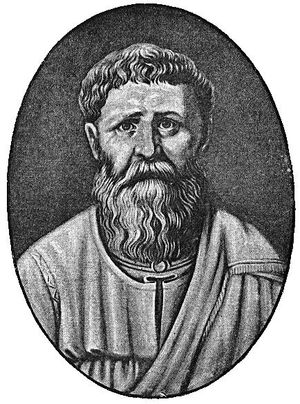
Augustine
Saturday, August 29, 2015
The Destruction of Right and Good
W.D. Ross, in What Makes Right Acts Right, presented an analysis on "right" that was utilitarian in nature; although, the utilitarian he referenced had a marked difference as his tendency was to compare it to hedonism. My point in quoting him is not the contrast but the statement he is making on what is "right."
Ross wrote regarding right, "The real point at issue between hedonism and utilitarianism on the one hand and their opponents on the other is not whether 'right' means 'productive of so and so'; for it cannot with any plausibility be maintained that it does. The point at issue is that to which we now pass, viz. whether there is any general character which makes right acts right, and if so, what it is. Among the main historical attempts to state a single characteristic of all right actions which is the foundation of their rightness are those made by egoism and utilitarianism."
How can anyone even make a claim that there is such a things as "right" in regard to anything today? With the promotion of individualism for capitalistic purposes, any idea of "right" becomes more generic mixing with ideas of what is "good." This leads to preference and tends to evaporate all ideas of right and good. There will be those who try to convince others that "right" is "good" and that which helps the most. Ross addressed that point in the following passage:
"The first form this attempt takes is the attempt to base rightness on conduciveness to the advantage or pleasure of the agent. This theory comes to grief over the fact, which stares us in the face, that a great part of duty consists in an observance of the rights and a furtherance of the interests of others, whatever the cost to ourselves may be. Plato and others may be right in holding that a regard for the rights of others never in the long run involves a loss of happiness for the agent, that 'the just life profits a man'. But this, even if true, is irrelevant to the rightness of the act. As soon as a man does an action because he thinks he will promote his own interests thereby, he is acting not from a sense of its rightness but from self-interest."
Every action without a moral agent is, in essence, a selfish action, which removes it from qualifying as a "right" or a "good" act because, in one way or another, it is a selfish act. Ross pushes the idea of pleasure from a hedonistic position as a product of utilitarianism, but that, for me, does not work either. It merely contributes to the destruction of any kind of good as pleasure is good for the individual only and thus preference. And, that is where I find culture currently... on a path towards the annihilation of those things that are "right" and "good." For that which is truly "right" and "good" is not that which is for self but that which is for others.
Looking at culture today, how hard is it to label something wrong? I would suggest that to label something of substance as wrong is difficult at best in today's culture. Labeling minor things as wrong is much easier but also problematic as the tendency defaults to an apathetic attitude which is a lazy form of preference.
What is good and right? The issue has become an issue of hyper-preference which cannot possibly be considered good or right yet has really become today's "good." And, if that is what good is then true good is already extinct, leaving preference as king and nothing right under the sun.
Friday, August 21, 2015
J. R. R. Tolkien
Wednesday, August 19, 2015
Self-Reflection
I was confronted with the idea of self-reflection the other day. Just how valuable is self-reflection?
I think there is merit to its use, but I am just not sure how much. My dilemma is not new. I am sure many more intelligent than me have struggled with the issue I am about to present, but just the same, it is an issue of struggle for me. Therefore, I am putting it out there for comments in order to be convinced one way or another; here it is.
I posit that self-reflection is a bit of a self-fulfilling prophecy once one reaches a certain point. Let me stop here and acknowledge that I do not know what point at this juncture.
Here is my issue. At what point does self-reflection become contributory to self-perception? I see it eventually pushing the humble person into more self-condemnation and the haughty person into more self-admiration. I believe there is merit in considering self, to a point, but after a certain point what was valuable, to me, now seems more detrimental.
Self-reflection must, in my humble opinion, be considered in light of human nature. As one who ascribes to an originalist position regarding human nature and acknowledges that human nature is sinful and in need of saving, self-reflection is a tenuous proposition, at best. The idea of reflection does not trouble me nearly as much as the idea of an unchecked self.
It is the self that is my concern because I know myself. Even in Christ, I struggle with this addiction to myself so self-reflection would certainly incur a similar struggle unless held accountable by some other source. What that other source is, at this point, I do not know. I do know that too much of self reflection can run its course and actually destroy the good things accomplished by the initial self-reflection.
Is self-reflection valuable? Yes, I believe it is, to a certain point. What is that point? I am not sure where that point is, but I do think that the point is earlier than most think.
Labels:
Opinion,
Personal,
Perspective,
Self-Reflection
Friday, August 14, 2015
Tuesday, July 21, 2015
The Supreme Court
As the concrete was poured in 1935, a court waited for a place to reside. The court was no ordinary court; it was the highest court in the land: the Supreme Court.
Article III of the Constitution established the Supreme Court; it convened for the first time in 1790 in New York City.
Prior to 1935, the Supreme Court met in New York City, Philadelphia and Washington D.C., always in various buildings or homes, never having a home to call its own.
The Supreme Court was finally given a building of its own in 1935. The building has its own police force, a gym and even a basketball court. It was first known as the court of last resort and has had a hand in shaping the country's history as it rules on constitutionality.
But, one wonders if having a home has changed the court in some way. The home is certainly no ordinary home. It is a spectacular building of concrete and granite, a building fit for a king, if you will. Which begs the question, is the court still a court of justices seeking to determine what the founding fathers would say through the constitution, or have they become royalty, ruling as kings?
Kings rule on high and determine decisions based on their own intellect, reason and feeling. A king is the norm by which he or she rules. Justices seek to rule in a humble and contrite way, desperately struggling to reach a decision that aligns with the founding fathers and the constitution.
Who currently resides in the Supreme Court: kings or justices?
The court is petition by no less than 10,000 cases per year, but they only actual rule on around 80 cases. On first glance, that appears to be quite a variance, but let's look at it in another way. If the court heard 80 cases a year then that would mean they took, on average, 4.5 days for each case.
The question then is this: does it take 4.5 days to rule as a king or to search for constitutionality? You decide.
Sunday, July 5, 2015
2015 World Cup Champions
The USA dominated Japan today in the final of the 2015 Women's World Cup with a 5-2 victory. They are the first team to win three World Cup titles.
Great game and great tournament! Congratulations to the USA Women's Soccer team!
Saturday, July 4, 2015
David Hume and the Power of the Statement
"All the objects of human reason or inquiry may naturally be divided into two kinds, to wit, relations of ideas and matters of fact."
Such a simple statement, yet the power contained in this seemingly innocuous statement is far reaching.
Hume wrote, regarding the first kind (relation of ideas, in reference to sciences and maths. Regarding the second kind (matters of fact), Hume presupposed that all are found in the relation of cause and effect.
Hume used this reasoning as evidence that we can go beyond our memory and senses when it comes to matters of fact but not too far. Hume stayed close enough to memory and the senses so as not to severe ties with both, but ventured far enough away to justify testing the boundaries of both.
Hume assumed that knowledge of this relation is not obtained by reason but instead through experience. By reason, he was referencing a priori knowledge: knowledge that is innate and not marked by experience. Hume proposef that "every effect is a distinct event from its cause." He was stating, quite emphatically, that every effect was rooted in experience because, for him, every effect was an event, and an event began as an experience and ended as one.
Hume was the empiricist whose arguments awoke Immanuel Kant from his slumber. Kant sought to confront Hume's arguments, but Kant, too, was a philosopher, and philosophy, well, what is it really? Why, I believe it is akin to religion without the supernal dimension.
After all, Hume confined reason to the human being by label and by division. He labeled it, as do most, as "human" reason, which, as a label, was fairly solidly tied to the human being. Second, he divided reason into two distinctly human areas: ideas and facts.
We can use Hume's strategy as applied to human reason to do the same in our understanding of philosophy. While Hume proposed two kinds of human reason, he was really only proposing one kind of reason... human. While there are five categories of philosophy, ethics, metaphysics, epistemology, politics and esthetics, all are really an approach rooted in mankind as the pinnacle and solution of all.
Statements, whether they are made by the likes of David Hume, who I think has a lot to say on human understanding, or by you and me are powerful. It is my contention that we are all philosophers of sort. We look at the world and make statements about our view of the world by the way we live in response to the world. We may not put these statements in written form, but, just the same, we make statements of meaning that affect others. As Christians, we must be sure of our statements, and we must never under-estimate the power of the statement.
Philosophers understand this better than most. Each is taught to carefully and methodically examine the life and the statement as both are to be connected in consistent ways. Both should reflect each other in the same way a mirror reflects an accurate image of who you are. If you grab another mirror and hold it up while standing in front of a mirror and reflect the image in the mirror, it is going to be you from a different angle. The angle may have changed, but the reflection will, for the most part, be consistently you.
Our statements should be of the same consistency... from different angles but an accurate reflection of who we are, and as Christians, that reflection should be Christ. Yesterday, I did a general survey of Facebook posts. I wanted to see how consistent posts where with the worldviews behind them. I chose four labels for the posts I examined: judgmental, measured, negative and positive. I deemed the labels measured and positive as those I should find from those responding according to worldview, and the labels judgmental and negative as those I should find from those responding according to the situation. Again, not very scientific, but this was just to satisfy my own curiosity.
I spent only an hour looking at posts. At the end of that hour, I tallied my results; I then went to examine the worldviews behind the posts. What I found was that almost every post was a response and a reflection of the situation and NOT of the worldview of the person behind the post. In most situations, if the original post was negative most of the responses, whether in agreement or not, followed that negative path.
Again, not very accurate, but this was only to satisfy my own curiosity, and to make the following point: the power of our statements reflect who we are to others and to us. We tend to become who we consistently are, and Facebook allows us more power in the presentation of who we are than every before. I personally think it makes us all a bit more egocentric and adds to our already overwhelming addiction to ourselves.
This whole exercise was convicting to me, but it was also confirming that Christ is still hammering away at me each day as I become more like Him. In the gospels, Christ is always a reflection of the Father. At times we get different angles, but He is always reflecting His Father in some way. We, too, must always reflect Christ no matter our angle, our situation or our statements.
Labels:
Christianity,
Culture,
David Hume,
Philosophy,
Worldview
Subscribe to:
Posts (Atom)